
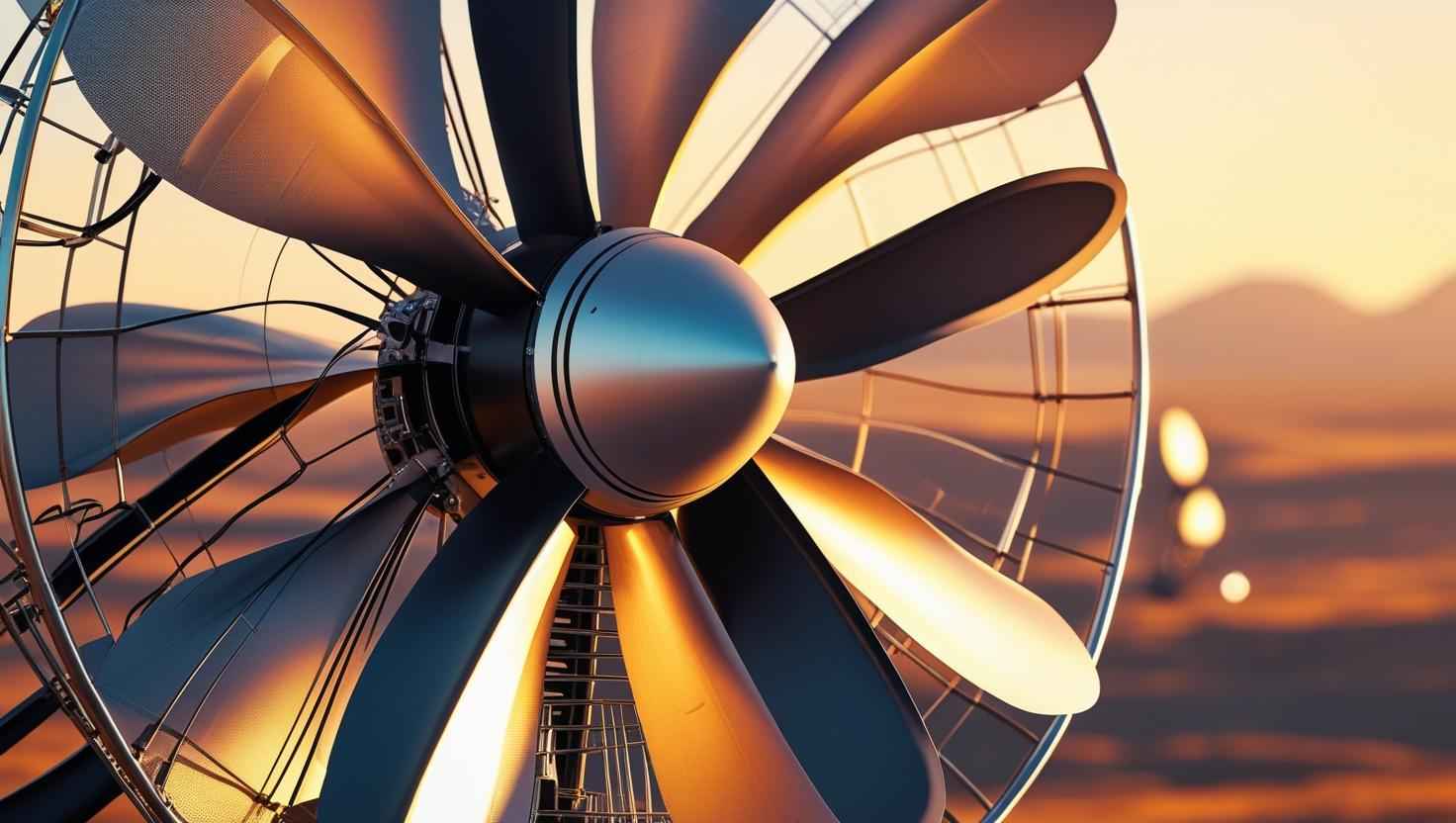
Looking for a solar powered fan? Learn how solar fans work, their benefits for energy savings, and see top-rated models for home, camping, and off-grid use. Stay cool sustainably with our expert guide.
What Is a Solar Powered Fan?
A solar-powered fan is a way to add ventilation without touching your electrical grid. It operates by converting sunlight into electricity via connected solar panels, often mounted on a roof or window.
These fans are useful in places where grid power isn’t easily available, or when energy efficiency is your top priority. Think hot attics, workshops, greenhouses, RVs, or any outdoor area that needs better air circulation.

What Are the Benefits of Using a Solar Powered Fan?
- Environmentally Friendly: No greenhouse gas emissions; reduces dependance on fossil fuels.
- Cost Savings: No electricity costs; potential to save money on utility bills.
- Low Maintenance: Fewer moving parts, no wiring and less upkeep.
- Improved Ventilation: Helps prevent moisture buildup, mold, and heat damage in attics, sheds, and other spaces.
- Portability: Many solar powered fans are cordless and easy to move.
- Safety: No risk of electrical accidents because the fan doesn’t have wiring or connection to the electrical grid.
Are There Any Downsides?
- Dependence on Sunlight: Limited or no operation at night or in shaded/cloudy conditions unless equipped with batteries.
- Upfront Cost: Higher initial investment compared to traditional fans, though offset by long-term savings.
- Performance Variability: Output depends on sunlight intensity and panel orientation.
- Limited Power: May not match the airflow of high-powered electric fans in all situations.
Best-Selling Solar-Powered Fans
No products found.
How Does a Solar Powered Fan Work?
So, how exactly does a solar-powered fan work? It’s a straightforward process: sunlight gets converted into electricity to power the fan motor, and delivers cooling without the need to draw power from your home’s electrical grid.
- Solar Panel Collection: The fan has a solar panel—roof-mounted, window-mounted, or installed directly into the unit—that captures sunlight. Inside, photovoltaic cells convert that light into direct current (DC) electricity.
- Electricity Transmission: This generated DC electricity flows directly to the fan’s motor, causing the blades to spin and circulate air.
- Operation Timing: Most solar fans operate whenever sunlight is available during the day. However, some models stand out by including built-in rechargeable batteries. These store surplus solar energy, allowing the fan to keep running during cloudy spells or even after dark.
- No Grid Connection Required: Crucially, these are typically standalone units. You won’t need to plug them into a wall outlet, which makes them perfect for off-grid spaces or as a reliable option during power outages.

How long can a solar powered fan run on stored energy?
Most solar-powered fans with integrated batteries have between 4 to 24 hours of runtime on stored energy, depending on the battery’s size and your chosen fan speed.
The exact runtime, however, is determined by the battery’s capacity, the fan’s speed setting, and its power consumption.
Typical Runtimes:
- Portable Fans: A standard 12-inch portable solar fan with a 7.4V 4Ah lithium battery might run for about 4 hours on high speed or up to 6 hours on low. Connect it to an external backup battery and solar panel, and that runtime can extend significantly—think 12 hours on high and up to 18 hours on low speed.
- Compact Camping Fans: Smaller models, often seen for camping, with a 10,000mAh battery often deliver 10 to 24 hours of operation on a full charge, depending on the chosen wind speed.
- Custom Systems: For more robust or custom setups, you can estimate battery runtime using a simple formula: divide the Battery Capacity (Watt-hours) by the Fan’s Power Draw (Watts). For example, a 12V 7Ah battery (which stores 84Wh) running a 12W fan would last roughly 7 hours.
Factors That Affect Runtime:
- Fan Speed: Higher speeds drain batteries faster.
- Sunlight Conditions: Cloudy days or insufficient sun limit how much the battery can charge, directly impacting its available stored energy.
- Battery Health: Like any rechargeable battery, its age and overall health will affect its performance and total capacity over time.
How does a solar powered fan compare to traditional electric fans in efficiency?
Solar Powered Fan vs. Traditional Electric Fan: Efficiency Comparison
| Feature | Solar Powered Fan | Traditional Electric Fan |
|---|---|---|
| Energy Source | Sunlight (renewable, free) | Grid electricity (often fossil-fueled) |
| Operating Cost | Zero after installation | Ongoing electricity costs |
| Power Consumption | Typically lower; e.g., 16″ solar fan uses 5W | Higher; e.g., 16″ electric fan uses 23–34W, 18″ up to 57W |
| Environmental Impact | No emissions, reduces carbon footprint | Contributes to carbon emissions |
| Performance Consistency | Depends on sunlight; may need battery backup | Consistent as long as grid is available |
| Initial Cost | Higher upfront (panels, batteries) | Lower upfront, but higher long-term cost |
Can a solar fan run at night?
Yes, many solar-powered fans can run at night, but it depends on their design. While basic solar fans operate only when actively receiving sunlight, numerous models are now engineered to provide cooling and ventilation even after the sun goes down or during prolonged cloudy periods.
Here’s how solar fans can operate at night:
- Integrated Battery Backup: This is the most common solution. Many portable fans, and even some fixed-installation models like attic fans, feature a built-in rechargeable battery. Throughout the day, any surplus electricity generated by the solar panel charges this battery. Once sunlight is no longer sufficient, the fan automatically switches to drawing power from its internal battery, allowing it to continue running for several hours. Keep in mind that higher fan speeds will deplete the battery more quickly, so adjusting the setting can extend the runtime.
- Hybrid AC/DC Operation (Grid-Connected): For consistent, 24/7 ventilation, especially in applications like attic fans, some advanced models offer a “hybrid” capability. These fans are equipped with an AC/DC inverter, enabling them to seamlessly transition from solar power to your home’s electrical grid when sunlight is unavailable (e.g., at night or during very overcast days). This ensures continuous operation, which is critical for constant heat and moisture removal from enclosed spaces like attics.
- External Battery Systems (Larger or Custom Setups): For more extensive or off-grid installations—such as in cabins, large workshops, or RVs—a solar fan can be paired with a dedicated external battery bank. This bank is charged by a larger, separate solar panel array during the day, providing substantial stored energy to power the fan (and potentially other devices) throughout the night. This offers the most flexibility and longest runtimes for continuous operation.
Key Features to Look For:
If you need to run your solar fan at night, look for models that clearly advertise:
- “Battery Backup” or “Rechargeable Battery”: Always check the battery’s capacity (often listed in mAh or Wh) and the manufacturer’s stated runtimes at different fan speeds.
- “Hybrid” or “AC/DC Inverter”: This indicates the fan can switch to your existing grid power for continuous operation.
How to Choose the Right Solar Powered Fan
Picking the right solar-powered fan means considering where and how you plan to use it. There’s no single “best” option; instead, the ideal fan will match your specific ventilation needs, desired runtime, and installation preferences.
Here are the key features to think about before you buy:
1. Fan Type and Application:
- Attic Fans: Designed for permanent roof or gable installation to remove heat and moisture from attics, which can significantly lower indoor temperatures and reduce HVAC strain. Look for higher CFM (Cubic Feet per Minute) ratings for larger attic spaces.
- Portable/Camping Fans: These are typically smaller, lightweight, and often include integrated batteries and USB charging ports for versatility on the go. They’re great for tents, RVs, workshops, or personal cooling.
- Greenhouse/Shed Fans: Often robust and built to withstand outdoor elements, these focus on maintaining consistent airflow to prevent heat buildup and humidity in enclosed structures.
2. Power and Airflow (CFM):
The fan’s power directly relates to how much air it can move, measured in Cubic Feet per Minute (CFM). Higher CFM means more air circulation, which is crucial for larger spaces or areas needing rapid heat extraction (like attics). Match the fan’s CFM rating to the size of the area you intend to cool or ventilate.
3. Battery Backup and Runtime:
If you need the fan to operate after dark or on cloudy days, a model with a built-in battery is essential. Consider:
- Battery Capacity: Larger batteries (measured in Watt-hours or milliamp-hours) offer longer runtimes.
- Expected Runtime: Check manufacturer specifications for typical runtimes at various fan speeds. Remember that using higher speeds will deplete the battery faster.
- Charging Options: Some fans allow for USB charging or have larger, external solar panels to speed up recharging or extend operation.
4. Installation and Portability:
- Fixed Installation: For attics or permanent structures, you’ll need a fan designed for roof or wall mounting. Check for ease of installation and compatibility with your existing vents.
- Portable Use: Look for lightweight designs, built-in handles, and stable bases if you plan to move the fan frequently.
5. Durability and Weather Resistance:
Especially for outdoor or semi-outdoor applications, the fan needs to withstand the elements. Look for:
- Material Quality: Fans made with durable materials like aluminum, stainless steel, or high-grade, UV-resistant plastics will last longer.
- IP Rating: An Ingress Protection (IP) rating indicates how well the fan is sealed against dust and water. Higher numbers (e.g., IP65 or IP68) mean better protection.
- Motor Type: Brushless DC motors are generally more efficient, quieter, and have a longer lifespan.
6. Additional Features:
Some fans offer extra perks that might be beneficial:
- Adjustable Solar Panels: Allows you to optimize sun exposure.
- Thermostats: For attic fans, a built-in thermostat can automatically turn the fan on/off at specific temperatures.
- Noise Level: While solar fans are generally quieter than AC-powered ones, some are quieter than others, a factor especially relevant for living spaces or RVs.
- USB Charging Ports: Convenient for charging other devices on the go.
How does a solar powered fan generate energy from sunlight?
A solar-powered fan converts sunlight into usable electricity. This process, known as the photovoltaic effect, is the backbone of how these fans operate.
Here’s a step-by-step look:
- Photovoltaic Panels Capture Sunlight: At its core, the fan is equipped with solar panels. These are typically made from semiconductor materials, most commonly silicon, and are strategically positioned to absorb as much direct sunlight as possible.
- Conversion to Electricity: When photons (tiny packets of light energy) from the sun strike the photovoltaic cells, they’re absorbed by electrons within the semiconductor material. This energy boost excites the electrons, causing them to break free and move. This directed flow of electrons is what generates a direct current (DC) of electricity.
- Powering the Fan Motor: The DC electricity generated by the solar panels is then routed directly to the fan’s motor. The motor efficiently uses this electrical input to spin the fan blades, creating the desired airflow.
- Optional Battery Storage: Many solar fans incorporate a battery. During peak sunlight hours, any excess electricity produced by the panels can be stored in this battery. This stored energy allows the fan to operate even when the sun isn’t shining—like after sunset or on a particularly cloudy day.
- Additional Components (Less Common but Helpful): While simpler fans might omit these, some models include extra components for optimized performance:
- Charge Controller: This regulates the voltage from the solar panel, protecting the battery from overcharging and ensuring a steady flow of power.
- Inverter: Though less common for direct-drive DC fans, an inverter converts the DC electricity from the panels or battery into alternating current (AC) if the fan motor or system components require AC power.
Frequently Asked Questions
How much does a solar powered fan cost?
Prices range from $30 for small portable fans to $400+ for large attic models, not including installation.
Can a solar powered fan operate indoors with limited sunlight?
Do solar fans really reduce energy bills?
Are solar fans suitable for both small and large spaces?
Is professional installation necessary?
Conclusion
Solar-powered fans are a smart, eco-friendly investment for cooling and ventilation. They deliver long-term savings, require minimal maintenance, and help reduce your carbon footprint—making them a practical choice for homes, sheds, and more.
Related Articles:
- Urban Budget Camping: Gear & Tips to Supercharge City Camping
- Best-Selling Inflatable Camping Tents: Top Choices for 2025
- VikingBags Review: Viking Odyssey ADV Touring Tailpack 8L
- Solar Powered Fan: How They Work, Top Picks, and Key Benefits
- Viking Bags Explorer Adventure Touring Chest Harness for Hiking, Climbing & Travel
- The Hidden Dangers of Toxic Camping Tents
- Affordable Eco-Friendly Tents Under $300
- Is Your Camping Gear Safe? How to Check for Asbestos in Camping Gear
- Big Agnes Copper Spur vs Nemo Dagger: Choosing Your Backpacking Shelter
- Big Agnes Copper Spur vs Tiger Wall