
Portable power stations are an eco-friendly, convenient way to have a personal energy supply whenever you need it. If you’re camping in the middle of nowhere, or running essential electronics during a power outage, a portable power station is one of the most practical tools to invest in. In this article, we’ll take a look at two popular brands, Bluetti AC200Max vs EcoFlow Delta 2 Max, so see how they rate when compared to each other.
Bluetti AC200Max vs EcoFlow Delta 2 Max: how do they compare?
Battery
- EcoFlow and Bluetti both use LiFePO4 (lithium iron phosphate) battery technology in the power stations we reviewed.
- Long Lifespan: LiFePO4 batteries usually have a long life span of 3,500 to 4,000 charge / discharge cycles. This can equate to 7-15 years of life for the portable power station, depending on usage and maintenance.
- Safety: This battery is considered safer and is less likely to overcharge or overheat.
- Low Self-Discharge: LiFePO4 batteries can store energy longer, even when not in use.
Capacity
- Battery capacity is the total amount of energy, measured in watt-hours, that a portable power station can store.
- Both models can store the same amount of energy, with baseline capacity of 2,048Wh.
- However, the Bluetti AC200Max has more expandable capacity of 8,192 watt-hours, compared to 6,000 watt-hours for the EcoFlow Delta 2 Max.
Output
- Power output represents the maximum amount of electricity, measured in watts (W) or kilowatts (kW), that a power station can provide at one time.
- Surge power, or peak power, is the amount of high-output, short term energy the power station can generate, in cases where you need a lot of electricity for short bursts.
- These values tell you the electrical load that a power station can sustain and what type of devices and appliances can be connected.
- The EcoFlow Delta 2 Max delivers higher continuous output power of 2,400W, compared to 2,200W for the AC200Max
Charge Cycles (battery life)
- The Bluetti AC200Max has longer battery life with 3,500 charge cycles, compared to 3,000 charge cycles for the Delta 2 Max.
- With proper maintenance, both portable power stations should provide 8 to 10+ years of weekly usage under normal conditions.
Charging Options
- The EcoFlow Delta 2 Max has faster AC charging in 1.2 to 1.5 hours, compared to 4.5 to 5 hours for the AC200Max.
- The EcoFlow Delta 2 Max has faster solar charging in 2 to 3 hours, compared to 3.5 to 4 hours for the AC200Max.
- The Bluetti AC200Max provides 7 different ways to recharge the battery, compared to 4 ways on the Delta 2 Max.
- Bluetti AC200Max charging methods: AC + Solar, AC + AC, AC, Solar, Gas Generator, Lead Acid Battery, Car Cigarette Socket.
- EcoFlow Delta 2 Max charging methods: AC + Solar, AC, Solar, Car Cigarette Socket.
Outlets & Ports
- The Bluetti AC200Max has 16 output ports that include AC, DC, USB, RV ports and wireless charging pads.
- The EcoFlow Delta 2 Max has 15 output ports that include AC, DC, USB and DC.
- The Bluetti AC200Max offers wireless charging, which isn’t available on the Delta 2 Max.
- The Bluetti AC200Max has an RV port, which isn’t available on the Delta 2 Max.
- The EcoFlow Delta 2 Max gives you 6 x AC outlets, compared to 4 outlets on the AC200Max.
- The EcoFlow Delta 2 Max has 2 x USB-C ports, compared to 1 USB-C port on the AC200Max.
Portability
- The EcoFlow Delta 2 Max is 11lbs lighter and easier to transport, weighing 50lbs (23kg), compared to 61.9lbs (28.1kg) for the AC200Max.
Warranty
- The EcoFlow Delta 2 Max has longer warranty coverage of 5 years, compared to 4 years of coverage for the AC200Max.
Bonus Features
- The Bluetti AC200Max features a user-friendly LCD touch screen not available on the Delta 2 Max.
- The EcoFlow Delta 2 Max has UPS Mode (Uninterrupted Power Supply) with enables you to use the power station as a backup source that automatically turns on during a power outage, which isn’t available on the AC200Max.
- The EcoFlow Delta 2 Max has 30dB noise level, compared to 50dB for the AC200Max.
- The EcoFlow Delta 2 Max is WiFi Enabled and can be connected to the internet, which isn’t available on the AC200Max. That said – the Bluetti AC200Max can connect to Bluetooth.
- Both models offer pass through charging and can simultaneously recharge while charging connected devices.
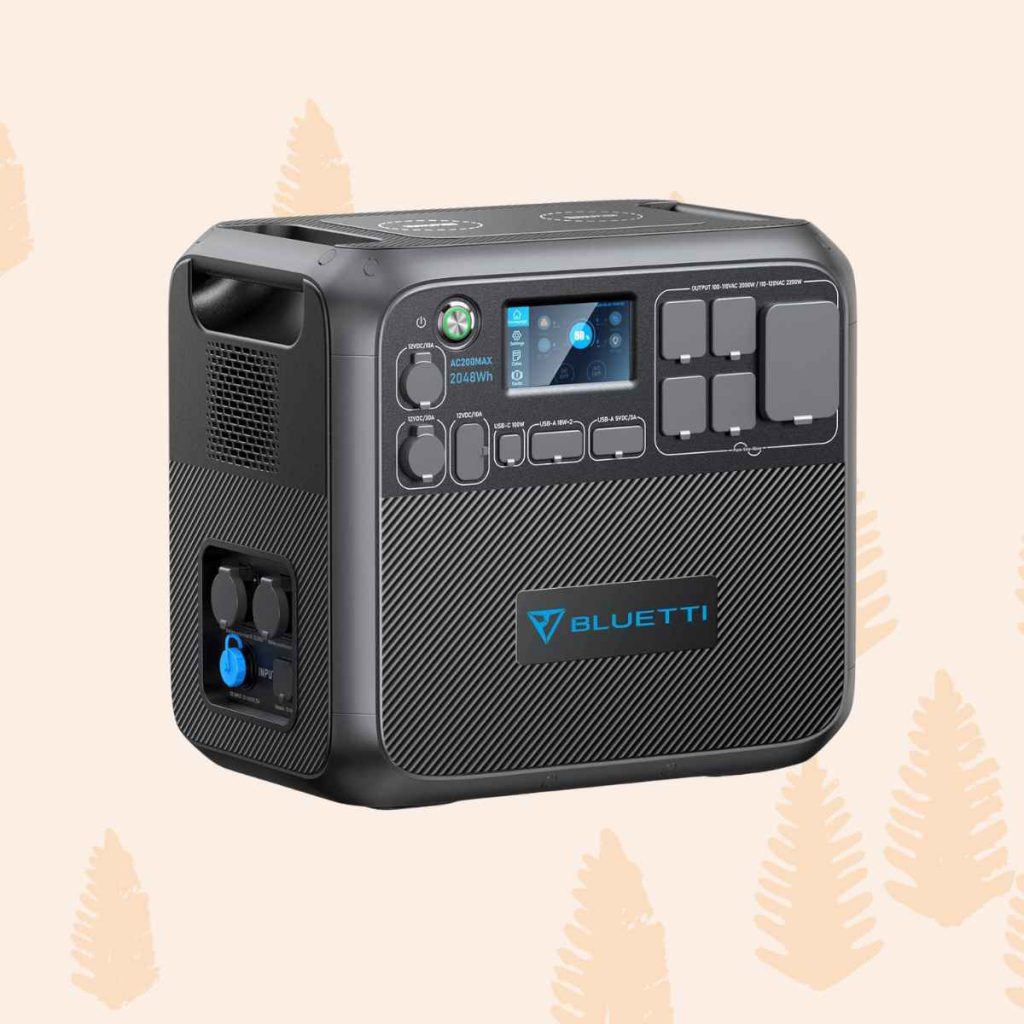
When is Bluetti AC200Max the right choice?

- [Expandable Capacity] - AC200MAX supports 2 BLUETTI...
The Bluetti AC200Max is best for camping, RV or van-life adventures because it gives you more ways to recharge the battery and an RV port. The AC200Max also delivers more expandable battery capacity (at an additional cost), a greater number of charge cycles, and cool features like a wireless charging pad.
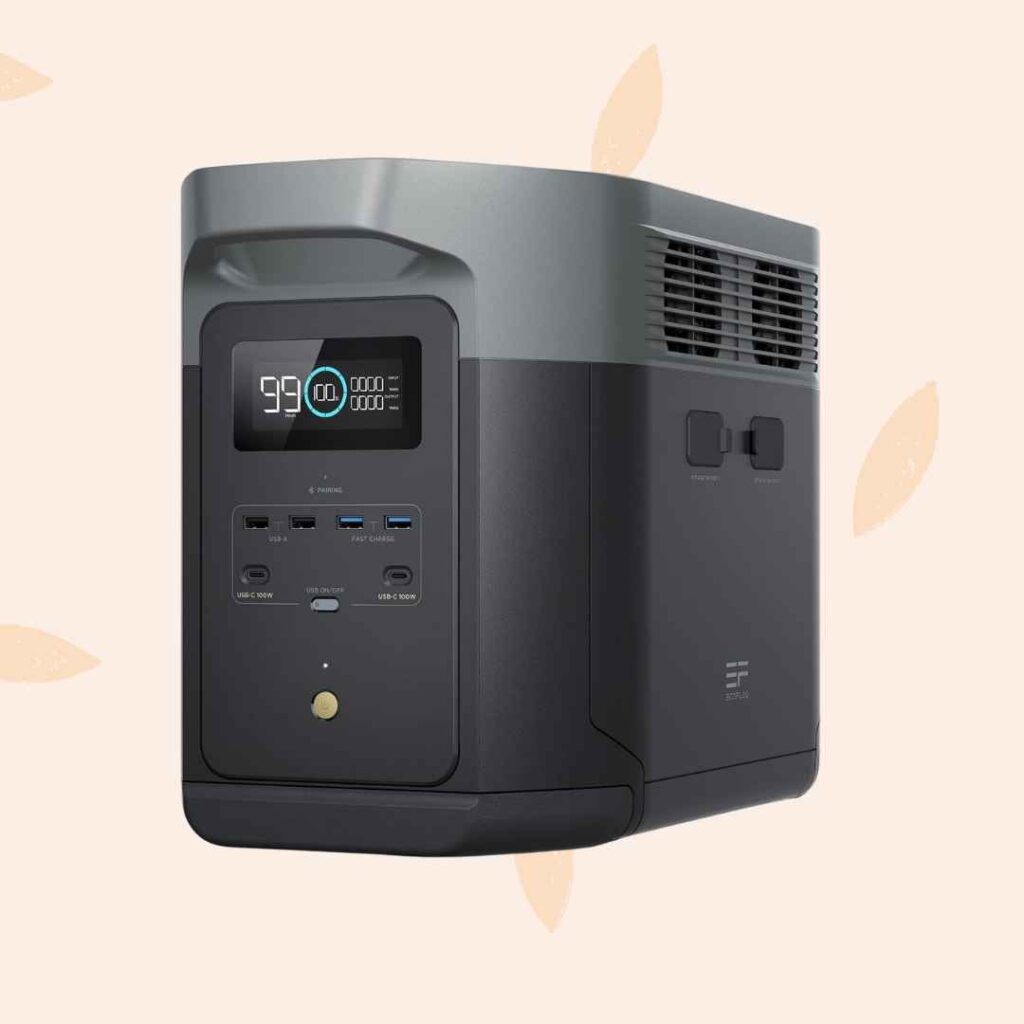
When is EcoFlow Delta 2 Max the right choice?

- Fuel up 80% in Only 43 Mins. With DELTA 2 Max's...
- 10-Year Long-Lasting LFP Battery. LFP battery chemistry...
- Expandable Capacity from 2kWh to 6kWh. Triple the...
- Power 99% of Your Household Devices. Run pretty much...
- Quiet Charging. With volume levels starting from only...
The EcoFlow Delta 2 Max is better for home backup because of its uninterruptible power (UPS) mode, fast AC charging speed, number of AC outlets, and quieter operation. It can automatically power sensitive appliances in a power outage, recharge faster, support more appliances plugged into AC outlets, and connect to the household WiFi network. It also runs more quietly, which is important when you’re using the power station indoors.
Bluetti AC200Max vs EcoFlow Delta 2 Max Feature Comparison
| Features | Bluetti AC200Max | EcoFlow Delta 2 Max |
|---|---|---|
| Battery Capacity | 2,048Wh (expandable to 8,192Wh) | 2,048Wh (expandable to 6,144Wh) |
| Lithium Battery Type | LiFePO4 | LiFePO4 |
| AC Power Output | 2,200W (4,800W Surge) | 2,400W (4,800W Surge) |
| AC Charging Time | 4.5 to 5 hours | 1.2 to 1.5 hours |
| Solar Charging Time | 3.5 to 4 hours | 2 to 3 hours |
| DC Charging Time | 11 hours via 24V / 21 hours via 12V | 11 hours via 24V / 21 hours via 12V |
| Weight and Portability | 61.8 lbs (28.1 kg) | 48 lbs (21.8 kg) |
| Output Ports | 16 Outputs | 15 outputs |
| Charge Cycles | 3,500 charge cycles | 3,000 charge cycles |
| AC Input | 500W | 1800W |
| Solar Input | 900W | 1000W |
| DC Input | 12V/24V | 12V/24V |
| Bluetooth | No | Yes |
| WiFi | No | Yes |
| App Control | Yes | Yes |
| Warranty | 4 years | 5 years |
| Noise Level | 50 dB | 30 dB |
Customer Experience and Reviews
Bluetti AC200Max
- PROS:
- 120 reviews – The Bluetti AC200Max has majority positive reviews on Amazon, with 4.4 out of 5 stars.
- HowToGeek Review: The reviewer appreciated the user-friendly LED screen and user-friendly interface. They also highlight the ability to charge lots of devices at the same time, the option to expand the battery capacity.
- TechRadar Review: The reviewer lauds the lithium battery technology, Bluetooth connectivity, and the option to expand capacity. It mentions the device’s noisy operation and bulky AC adapter as potential drawbacks.
- CONS:
- HowToGeek critiqued the heavy weight and hefty price of the Bluetti AC200Max.
- TechRadar did not like the AC200Max noise level and bulky AC adapter.
EcoFlow Delta 2 Max
- PROS:
- 318 reviews – The EcoFlow Delta 2 Max gets rave reviews on Amazon, with 4.5 out of 5 stars.
- Nerd Techy Review: This review positively recommends the Delta 2 Max’s overall design, ease of use, fast charging, and compact design.
- Gadgetoid Review: The reviewer conducted in-depth testing of the Delta 2 Max in an off-grid office setup, testing its ability to power workstations and connect with solar panels. The review praises the power station’s reliability and solar compatibility.
- CONS:
- Users on the EcoFlow Reddit community report that the power station disconnects when solar charging overnight. In these cases, the users have to disconnect / reconnect the solar panel.
- Some customers find EcoFlow power stations relatively expensive compared to other brands.
FAQs
How does the battery capacity of the Bluetti AC200Max compare to the EcoFlow Delta 2 Max?
The Bluetti AC200Max and EcoFlow Delta 2 Max battery capacity starts at 2,048 watt-hours. However, the Bluetti AC200Max offers more expandable capacity, reaching up to 8,192 watt-hours with additional battery modules, compared to the EcoFlow Delta 2 Max, which expands up to 6,000 watt-hours.
What is the weight of the Bluetti AC200Max?
The Bluetti AC200Max weighs 61.9 pounds (approximately 28.1 kilograms).
What is the battery capacity of the Bluetti AC200Max?
The battery capacity of the Bluetti AC200Max is 2,048 watt-hours, and it can be expanded up to 8,192 watt-hours with the addition of two B230 battery modules.
Which portable power station has a longer battery life, the Bluetti AC200Max or the EcoFlow Delta 2 Max?
The Bluetti AC200Max has a longer battery life, with 3,500 charge cycles. This equates to about 7 to 10 years t While the EcoFlow Delta 2 Max has 3,000 charge cycles.
What is the price difference between the Bluetti AC200Max and the EcoFlow Delta 2 Max?
The price difference between these two brands depends on discounts and promotions available. However, the EcoFlow Delta 2 Max is often priced slightly lower than the Bluetti AC200Max.
What is the maximum charging speed for the Bluetti AC200Max and the EcoFlow Delta 2 Max?
The EcoFlow Delta 2 Max has faster AC and solar charging speeds than the Bluetti AC200Max. The EcoFlow Delta 2 Max has AC charging speed of 1,800-watts, and 1,000-watts from its dual solar ports. In comparison, the Bluetti AC200Max AC charging speed is 500-watts, and 1000-watts using solar.
Conclusion
The EcoFlow Delta 2 Max is lighter, has a higher AC output, and charges faster, while the Bluetti AC200Max offers more output ports and a higher surge power capacity. The choice between the two depends on specific power needs, weight considerations, and the required number of output ports.
Related Posts: