
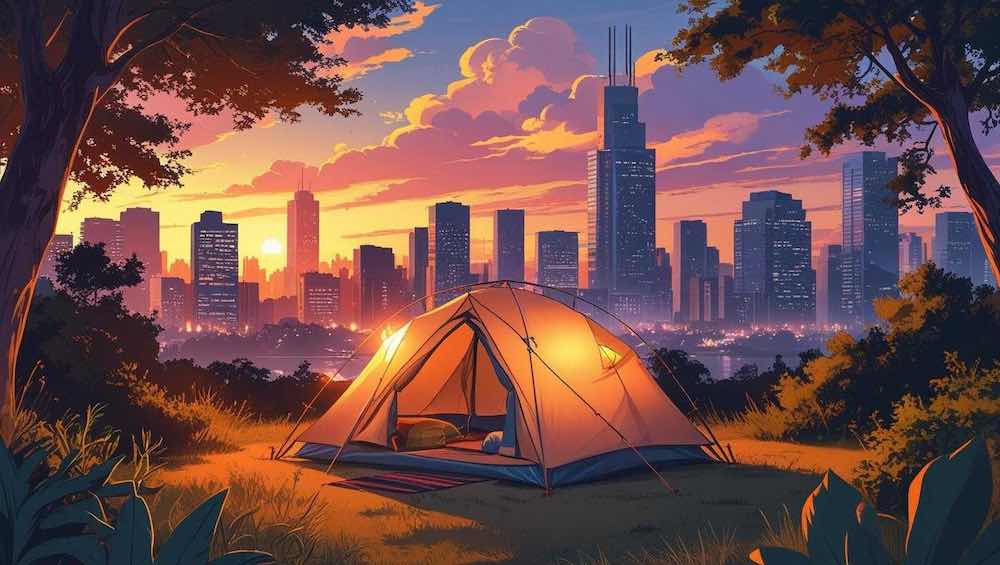
Stealth camping means setting up camp in places where camping isn’t allowed or expected, while blending in and not getting noticed by people or authorities.
It means sleeping in hidden spots not meant for camping, with the goal of staying undetected.
This unique style of camping offers freedom, privacy, and a low-cost way to experience the outdoors. The key is preparation, smart choices, and respect for laws and nature.
Table of Contents
What Is Stealth Camping?
Stealth camping is camping in places not designated for overnight stays, while keeping out of sight from others. This could include city parking lots, forests, beaches, or even quiet side streets. The idea is to avoid attention, save money on campsites, and experience solitude.
- It’s similar to wild camping, but with a bigger focus on not being seen.
- Stealth camping is popular with hikers, cyclists, vanlifers, and adventurers.
- People do it for free lodging, flexibility, and privacy.
Why Do People Stealth Camp?
- To avoid campsite fees and crowded campgrounds.
- For privacy and peace—no noisy neighbors.
- To travel freely, stopping anywhere fatigue hits.
- For adventure and self-reliance, learning survival and navigational skills.
Is Stealth Camping Legal?
Stealth camping is not always legal. It depends on local laws, city stealth camping rules, and land ownership.
- Camping on private property, near city streets, or in state/national parks can lead to fines or other trouble.
- Some public lands, especially outside of campgrounds, may allow it—check local ordinances and do research.
- Always look for “No Camping” or “No Overnight Parking” signs.
- Permits might be needed for some dispersed camping areas.
Top Stealth Camping Locations
When picking a stealth camping spot, look for these features:
| Location Type | Pros | Cons |
|---|---|---|
| Urban parking lots | Hidden inside vehicles, easy access | Potential for authority attention |
| Forests and woodlands | Easy to blend in, natural cover | Wildlife, tricky terrain |
| Beaches (when allowed) | Scenic views, natural masking | Exposed, sometimes off-limits |
| Fields or meadows | Quiet, flat ground | Harder to hide, private property risk |
- Always avoid spots marked with “No Trespassing” signs.
- Pick spots away from roads, trails, and busy areas.
How to Choose a Stealth Camping Spot
What Should I Look for When Picking a Spot?
- Hidden by trees, bushes, or terrain.
- Off-trail or just out of sight from paths and buildings.
- Flat, dry, and free from rocks or roots for comfort.
- Water source nearby for drinking and cleaning.
- Free from hazards above, like dead branches.
- On public lands only, unless you have permission for private property.
- Not in environmentally sensitive areas or close to water (at least 100 ft away).
Essential Stealth Camping Gear
Packing the right gear makes stealth camping easier.
Tent or bivvy bag in earth tones: green, brown, gray.


Sleeping bag rated for the season (winter vs summer)


Camping stove (instead of open fires)


First-aid kit


Portable water filter


Headlamp with a red light setting
No products found.
GPS Maps or Navigation
No products found.
No products found.
No products found.
Rain cover and bug netting
No products found.
No products found.
No products found.
Waste bags for trash
Food that doesn’t need cooking
Skills Needed for Stealth Camping
What Do I Need to Know?
- Basic survival skills: making shelter, finding water, handling emergencies.woodtowater
- Navigation: map-reading, knowing property boundaries.woodtowater
- Stealth skills: blending in, minimizing signs of camping.dutchwaregear+1
- “Leave No Trace”: Always clean up and erase all evidence of your stay.battlbox+2
How to Stay Undetected: Expert Tips
How Do I Blend In and Not Get Caught?
- Arrive late, leave early: Set up at dusk and leave at dawn.
- Keep noise low: Avoid talking loudly, minimize movement when possible.
- No fires: Fires attract attention and can be illegal, use warm clothing or a camping stove instead.
- Pack natural-colored gear: Greens, browns, and grays look like part of the landscape.
- Stay off social media: Don’t post about your location until you’ve left.
- Clean up everything: No trash, food wrappers, or footprints left behind.
- Park or camp at a distance from roads and neighborhoods: Farther from traffic means less chance of being seen.
- Watch for hazards: Avoid unstable ground, flooding spots, and dead trees.
Common Stealth Camping Mistakes
- Camping on private property without permission.
- Making a fire in a restricted area.
- Leaving trash or signs of presence.
- Staying in one spot for more than a night.
- Ignoring local laws or not researching rules ahead of time.
Leave No Trace: Why Is It Important?
What Is “Leave No Trace” in Stealth Camping?
Leaving no trace means making sure nobody can tell you were ever there once you pack up and leave.
- Pack out every piece of trash—including bits of thread, wrappers, and scraps.
- Erase footprints and cover up tire/bike tracks.
- Avoid disturbing plants and wildlife.
- Never damage trees or vegetation while setting up camp.
FAQs: Frequently Asked Questions About Stealth Camping
Is Stealth Camping Dangerous?
- It can be risky if in high-crime areas or on dangerous terrain.
- Use common sense and research the area for crime or hazards.
What Does “Stealth” Actually Mean in Camping?
- “Stealth” means avoiding attention—no signs or sounds to let others know you’re there.
How Long Can You Stay in a Stealth Camp?
- One night only is generally the rule.
What’s the Difference Between Dispersed and Stealth Camping?
- Dispersed camping is legal camping outside designated sites, often on public lands. Stealth camping can be legal or not, depending on the location.
Sample Stealth Camping Packing List
| Item | Why It’s Needed |
|---|---|
| Earth-tone shelter | Blending with surroundingswoodtowater |
| Sleeping bag | Stay warm and comfortablewoodtowater |
| Portable stove | Cook without a firebattlbox+2 |
| Water filter | Safe water anywherewoodtowater |
| Red-light headlamp | Low-key lightingwoodtowater |
| First-aid kit | Handle emergencieswoodtowater |
| Light food, snacks | Easy meals, less trashwoodtowater |
| Trash bags | Pack out wastewoodtowater+2 |
| Rain gear | Stay drywoodtowater |
| Navigation app/map | Property boundariesdoingmiles+1 |
Conclusion
Stealth camping gives freedom and adventure, but it’s vital to follow laws, pick smart locations, and always hide your presence before leaving. This style of camping is best for those who are prepared, quiet, and respectful of the land. For a positive experience, learn the skills, pack the right gear, keep a low profile, and always “leave no trace” behind.
Related Articles:
- What Is Stealth Camping?
- Car Camping Essentials: What You Really Need
- Top 14 emergency kits every camper should have in their backpack
- The Average Cost of Tent Camping in the US: Comprehensive Guide for Budgeting
- Green Camping Guide: How To Make Your Outdoor Trip Eco-Conscious
- How To Install A Rooftop Tent
- Master the Art of Solo Camping
- The Ultimate Guide to Backpacking
- Eco-Friendly Camping Activities: Engage with Nature Responsibly
- The Best Camping Spots You’ve Never Heard Of
Citations:
- https://www.ecoflow.com/us/blog/what-is-stealth-camping
- https://www.woodtowater.co.uk/blogs/bushcraft-camping-guides-1/what-is-stealth-camping
- https://www.battlbox.com/blogs/camping/stealth-camping-essentials-a-guide-to-your-ultimate-outdoor-adventure
- https://doingmiles.com/techniques-stealth/
- https://www.discobed.com/en-eu/post/what-is-stealth-camping-a-beginners-guide-to-staying-hidden
- https://beyondthebucketlist.co/vanlife-stealth-camping/
- https://grandgoldman.com/blogs/camping/stealth-rules
- https://dutchwaregear.com/2023/08/02/stealth-camping-tips/
- https://tmbtent.com/what-is-stealth-camping/
- https://www.reddit.com/r/StealthCamping/comments/1jk9bdy/beginners_guide_to_stealth_camping/
- https://tomsbiketrip.com/how-to-camp-anywhere-and-not-get-busted/
- https://www.lippertcomponents.eu/blog/stealth-camping-beginners-guide/
- https://www.youtube.com/watch?v=iE5vDFQkGlM